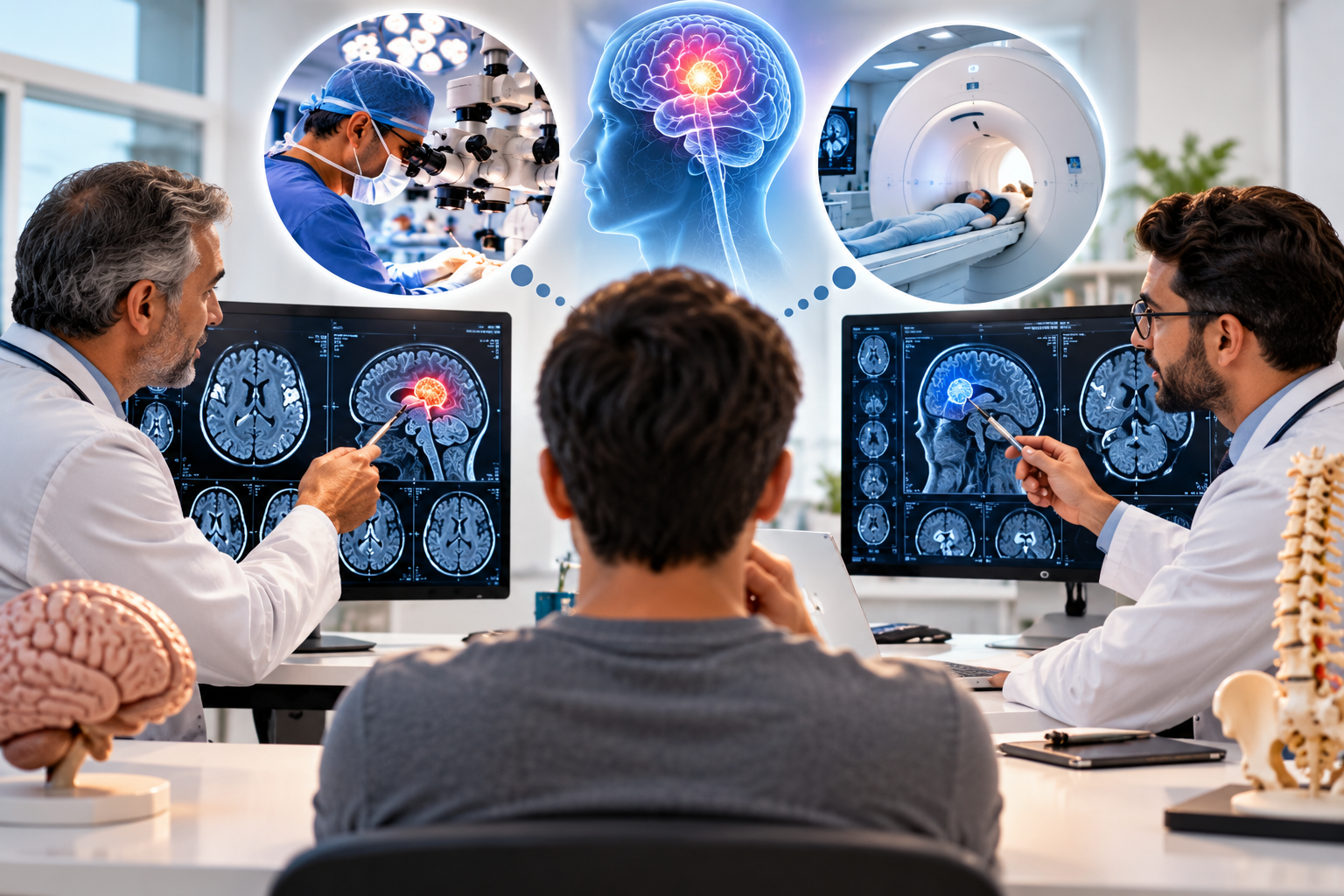
Why Is a Second Opinion Important in Neurosurgery?
Diseases affecting the brain, spinal cord, and nervous system require careful evaluation and appropriate treatment planning. Especially when surgery has been recommended, obtaining a second specialist opinion helps patients better understand their treatment options and make informed decisions.
A second opinion is an independent assessment of an existing diagnosis and treatment recommendation by another specialist physician.
When Should You Seek a Second Opinion?
A second opinion may be particularly helpful in the following situations:
| Brain tumors: Evaluating the need for surgery and alternative treatments. |
| Lumbar and cervical disc herniations: Exploring nonsurgical treatment options. |
| Spinal disorders: Comparing different surgical techniques. |
| Brain aneurysms: Assessing surgery, endovascular treatment, or monitoring options. |
| Complex neurological conditions: Reassessing the diagnosis and treatment plan. |
Benefits of Obtaining a Second Opinion
Confirming the diagnosis: MRI, CT, and other diagnostic tests can be reviewed by another specialist.
Alternative treatment options: Microsurgery, endoscopic surgery, or nonsurgical treatments may be considered when appropriate.
Reducing the risk of unnecessary surgery: An additional assessment can help determine whether surgery is truly necessary.
Understanding treatment risks: Patients can obtain more comprehensive information about the benefits of surgery, potential complications, and recovery.
Greater confidence in decision-making: By comparing different specialist opinions, patients can make better-informed decisions about their treatment.
Second Opinions in Neurosurgery in Türkiye
Some hospitals in Türkiye offer remote second-opinion services to international patients.
Patients can request a specialist assessment by sharing MRI and CT images, medical reports, and information about previous treatments.
A second opinion may confirm the existing treatment plan, suggest a different approach, or recommend additional examinations.
However, a remote assessment cannot always replace an in-person medical examination.
What Should You Consider When Seeking a Second Opinion?
It is important to consult a specialist experienced in the relevant condition. All medical documents should be shared completely, and the recommended treatment should be evaluated together with its potential risks.
Important: In emergencies involving sudden weakness, changes in consciousness, a sudden severe headache, or new loss of bladder or bowel control, seek emergency medical care immediately rather than waiting for a second opinion.
Conclusion
A second opinion in neurosurgery helps patients compare treatment options and make more informed decisions.
Seeking a second opinion does not mean distrusting the first physician; it provides an additional opportunity to confirm the diagnosis and choose appropriate treatment.